1. Introduction
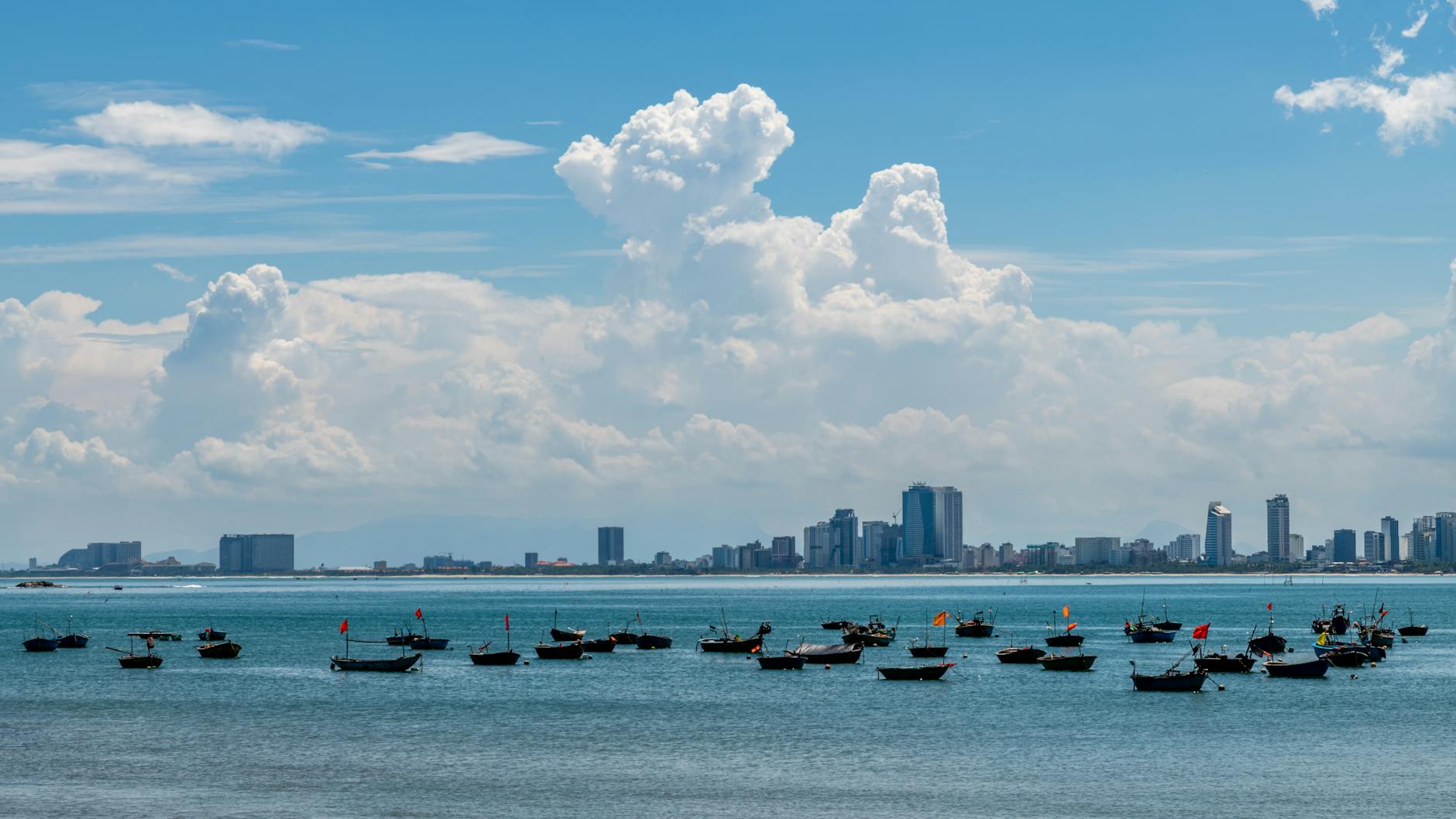
Sitting between Hue and Hoi An on Vietnam’s central coast, Da Nang combines long city beaches, green peninsulas, and a relaxed, modern atmosphere that feels very different from Hanoi or Ho Chi Minh City. A trip to Da Nang gives you easy access to nature, good food, and day trips to several UNESCO sites, without sacrificing comfort or transport links.
This guide will help you plan your Da Nang travel in detail: where to stay, what to do from sunrise on My Khe Beach to the night lights of Dragon Bridge, how to organise visits to Ba Na Hills, the Marble Mountains, and nearby Hoi An, plus realistic budgets and transport options.
Good to know: Da Nang is one of Vietnam’s easiest cities to navigate, with an international airport in the center, a compact urban area, and beaches only minutes from most hotels.
2. Geography & Orientation
Da Nang sits on Vietnam’s central coast, roughly halfway between Hanoi and Ho Chi Minh City, facing the East Sea with mountains behind it and the Hai Van Pass to the north. This geography creates a scenic blend of sea, river, and hills that shapes many of the best things to do in Da Nang.
Key areas to orient yourself:
My Khe / Coastal strip: Long sandy beach just east of the city center, lined with hotels, cafés, and seafood restaurants.
Hai Chau / City center: West of the Han River, with offices, local markets, and many eateries and cafés.
Son Tra Peninsula: A forested peninsula to the northeast, home to viewpoints, Linh Ung Pagoda, and the Lady Buddha statue.
Marble Mountains area: South of My Khe on the way to Hoi An, a cluster of limestone and marble hills with caves and pagodas.
Distances are short: from the airport to the beach is about 10–15 minutes by taxi, and from the city center to Son Tra’s base is roughly 15–20 minutes. This compact layout makes it easy to see many Da Nang attractions even on a short stay.
3. History & Cultural Context
Historically, Da Nang sat near the heart of the Cham Kingdom, which controlled much of central Vietnam for centuries. The Museum of Cham Sculpture in Da Nang now holds the world’s largest collection of Cham artefacts, with stone carvings from sites like My Son Sanctuary.
During the colonial era and the Vietnam War, Da Nang developed as a strategic port and air base, which helped shape its modern infrastructure and wide, grid‑like streets. In recent decades, the city has shifted toward tourism, technology, and services, earning a reputation within Vietnam for being dynamic, relatively orderly, and livable.
Culturally, Da Nang feels less traditional than nearby Hoi An, but more contemporary and local. Street food stalls, family‑run eateries, and coffee shops sit alongside beach resorts and modern bridges over the Han River, creating a blend that appeals both to Vietnamese holidaymakers and international travelers.
4. The Must‑Sees – Sites & Monuments
4.1 My Khe Beach and City Beaches
One of the core reasons to visit Da Nang is its long, sandy coastline. My Khe Beach stretches south from the base of Son Tra Peninsula, with soft sand and relatively gentle waves, especially outside stormy months.
Typical activities at My Khe and nearby beaches:
Early‑morning walks among local joggers and swimmers.
Swimming and sunbathing when the sea is calm.
Beachfront cafés and seafood restaurants.
Surfing and stand‑up paddleboarding in certain seasons.
Tip: Locals often avoid midday sun. For a more atmospheric experience, head to the beach just after sunrise or around late afternoon when the light is softer and the shoreline becomes social.
4.2 Son Tra Peninsula & Lady Buddha
The Son Tra Peninsula juts into the sea north of My Khe, covered in forest and offering some of the best viewpoints over Da Nang. It is also home to the endangered red‑shanked douc langur, one of the world’s most striking primates, although sightings require patience and respect for the habitat.
Key spots on Son Tra:
Linh Ung Pagoda with its towering Lady Buddha statue watching over the bay.
Curving coastal roads with viewpoints back toward the city and south to the Marble Mountains.
Small hidden coves and lesser‑known beaches.
Renting a motorbike or hiring a car with driver gives you flexibility to stop for photos and short walks. Take care on steep, winding roads, especially in wet conditions.
4.3 Marble Mountains (Ngu Hanh Son)
About 15 minutes south of the city and beach area are the Marble Mountains, a cluster of five marble and limestone hills, each named for an element. Visitors usually focus on Thuy Son, the largest and most developed for tourism.
A visit typically includes:
Climbing stone stairways (or using an elevator part of the way).
Exploring caves with Buddhist shrines and shafts of natural light.
Visiting small pagodas and viewpoints over the coast.
Practical note: Wear shoes with good grip and bring water. Surfaces can be slippery after rain, and there are many steps.
4.4 Bridges over the Han River (Dragon Bridge & More)
Da Nang is famous for its modern bridges. At night, the Dragon Bridge lights up in shifting colors and, on weekend evenings, the dragon’s head breathes fire and water in a short show.
Other notable bridges:
Han River Bridge: Vietnam’s first swing bridge, an early symbol of the city’s renewal.
Tran Thi Ly Bridge: Recognizable by its sail‑like design, especially scenic at night.
Walking along the riverfront in the evening is a pleasant way to feel Da Nang’s urban energy, with food stalls, cafés, and families out for a stroll.
4.5 Ba Na Hills & Golden Bridge
About 35–40 km west of Da Nang lies Ba Na Hills, a hill resort reached by cable car, known today for the photogenic Golden Bridge supported by giant stone hands.
Expect at Ba Na Hills:
A long, scenic cable car ride up the mountain.
Cooler temperatures than in the city.
The Golden Bridge viewpoint, gardens, and a themed “European” village area.
Reality check: Ba Na Hills is beautiful but can be crowded and commercial. If you prefer nature and quiet, you may enjoy Son Tra and the Marble Mountains more; if you like theme parks and photo spots, it is a highlight.
5. Neighborhoods & Areas to Explore
5.1 My Khe / Beachfront Strip
If your Da Nang trip centers on the sea, staying near My Khe Beach or the coastal road is ideal. The area is full of mid‑range hotels, apartment rentals, and a growing number of cafés and seafood restaurants aimed at both locals and visitors.
Good reasons to base yourself here:
Short walk to the beach.
Easy taxi or motorbike ride to Son Tra, Marble Mountains, and city center.
Relaxed, holiday feel with many dining options.
5.2 Hai Chau / City Center
On the west side of the Han River, Hai Chau District forms central Da Nang, with markets, government buildings, and many eateries.
Highlights include:
Han Market and Con Market for local food and household goods.
Streets lined with cafés ranging from simple to specialty coffee.
Easier access to the Museum of Cham Sculpture and transport hubs.
This area suits travelers who enjoy an urban, local atmosphere more than a beach‑resort feel.
5.3 Son Tra Foothills & Boutique Stays
Around the base of Son Tra Peninsula, especially toward the northern end of the beach, you find a mix of boutique hotels, villas, and more tranquil neighborhoods. These can be a good choice if you want quick access to both the city and forested hills while staying in a quieter corner.
Tip: Think of Da Nang as two main zones for visitors—beach side and city side—connected by bridges. Choose based on whether you prefer sunrise on the sand or easy access to markets and cafés.
6. Food & Gastronomy – Eating in Da Nang
Da Nang is a strong destination for food lovers, combining central Vietnamese dishes with fresh seafood.
Typical local specialties to try:
Mi Quang: Turmeric‑tinted rice noodles with pork, shrimp, herbs, and peanuts, served with just a bit of broth. It is the signature dish of the region.
Bun cha ca: Fish cake noodle soup, often eaten for breakfast.
Banh xeo and nem lui: Crispy rice pancakes and grilled pork skewers to wrap with herbs and rice paper.
Seafood: Grilled clams, squid, shrimp, and fish at casual beachside restaurants.
Price ranges:
Street‑food or simple local meal: around $1.50–4.
Sit‑down seafood dinner: approximately $10–20 (250,000–500,000 VND) per person, depending on what you order.
Coffee in a local café: usually $1–3.
Many visitors enjoy exploring coffee culture here: Da Nang has both traditional Vietnamese coffee shops and modern specialty cafés with air‑conditioning and good Wi‑Fi, especially around Hai Chau and the beach area.
Practical tip: For seafood, check prices per 100 g or per kilo on the menu before ordering, and confirm how the dishes will be cooked to avoid surprises on the bill.
7. Nightlife & Going Out
Nightlife in Da Nang is more relaxed than in major party destinations, but there is still plenty to do after dark.
Main evening options:
Riverfront strolls: Especially around Dragon Bridge and along the Han River, where you will find street food, ice cream, and casual bars.
Rooftop bars in city‑center or beachfront hotels, offering views of the lights and bridges.
Night markets that appear in certain areas, selling snacks, clothes, and souvenirs.
Weekend Dragon Bridge fire and water show, usually in the evening on specific days.
For a quieter evening, many travelers simply enjoy a late seafood dinner by the beach or coffee in a local café.
Note: Noise regulations are stricter than in some other Vietnamese cities, so nightlife tends to be concentrated in certain zones rather than spread everywhere.
8. Shopping & Local Crafts
Da Nang is not as well‑known for handicrafts as Hoi An, but you still have several shopping options.
8.1 Local Markets
Han Market: Central market selling clothing, dried fruits, coffee, souvenirs, and everyday items.
Con Market: More local in feel, known for its food stalls and produce.
Here you can buy:
Dried seafood and local snacks.
Coffee beans and tea.
Simple clothes and shoes.
8.2 Marble and Stone Carving near Marble Mountains
The area around Marble Mountains has long been associated with stone crafting. Many workshops produce marble and stone sculptures, from small decorative items to large statues.
Warning: Remember weight limits and luggage space—stone souvenirs can be heavy and fragile. If you buy something large, ask the shop about international shipping options.
8.3 Modern Shopping Malls
Da Nang also has several malls and supermarkets where you can buy international brands, electronics, and travel supplies, which can be convenient on longer trips.
9. Unusual & Alternative Activities
Beyond the classic checklist, there are more original ways to experience Da Nang.
9.1 Motorbike Rides on Hai Van Pass
North of Da Nang, the Hai Van Pass is one of Vietnam’s iconic coastal roads, with sweeping views over the sea and mountains.
Options include:
Renting a motorbike and riding independently (for experienced riders).
Booking a guided motorbike tour or “easy rider” with a driver.
Joining a car tour that includes viewpoints.
9.2 Wildlife and Photography on Son Tra
Instead of only visiting the pagoda, spend more time exploring Son Tra Peninsula at slower pace:
Early‑morning or late‑afternoon drives for softer light.
Short walks on side roads to quiet viewpoints.
Possible wildlife spotting (from a respectful distance) if you go with a guide who knows the area.
9.3 Local Coffee & Food Crawls
Da Nang’s café and street‑food culture make it easy to design your own “crawl” across neighborhoods:
Start with a breakfast bowl of mi quang.
Move between two or three specialty coffee shops in Hai Chau.
Finish with a seafood dinner near the beach.
Idea: Dedicate a half‑day to tasting local dishes rather than rushing between attractions. This can be especially rewarding in bad weather when beaches are less appealing.
10. Excursions from Da Nang
One of Da Nang’s biggest strengths is how many nearby destinations you can reach in under two hours.
10.1 Hoi An Ancient Town
About 30 km south of Da Nang, Hoi An is a UNESCO‑listed town known for lantern‑lit evenings, historic houses, and riverside dining.
Travel time and options:
By car/taxi: around 45–60 minutes.
By shuttle or tour: often similar, depending on pickup points.
Many travelers stay in Da Nang for the beach and visit Hoi An for the day or evening, although others choose the reverse.
10.2 My Son Sanctuary
Further inland, My Son Sanctuary preserves remains of Cham temple complexes in a forested valley. It can be visited as a half‑day trip from Da Nang, often combined with a river cruise or transfer toward Hoi An.
10.3 Hue Imperial City
To the north beyond Hai Van Pass lies Hue, the former imperial capital with citadel walls, royal tombs, and a slower riverfront atmosphere.
Travel time: roughly 2–3 hours by car, bus, or train.
Many tours offer day trips, but an overnight stay allows a fuller visit.
Planning tip: A classic central Vietnam route is Hue – Da Nang – Hoi An. Da Nang works well as a base or midpoint thanks to its airport and beaches.
11. Practical Information
11.1 Weather & Best Time to Visit
Da Nang has a tropical monsoon climate with two main seasons: a dry period roughly from April to August and a wet/monsoon period from about September to March. Temperatures are generally warm year‑round, with the hottest months from June to August and the coolest from November to January.
The best time to visit Da Nang is often considered February to May, when humidity is lower, skies are sunnier, and conditions are comfortable for both beaches and sightseune to August and the coolest from November to January.
The best time to visit Da Nang is often considered February to May, when humidity is lower, skies are sunnier, and conditions are comfortable for both beaches and sightseeing.
Indicative climate overview:
Period | Typical daytime high | Season notes |
|---|---|---|
Feb–May | Around 82–90°F (28–32°C) | Often recommended as the best balance of sun and heat |
Jun–Aug | Up to about 95°F (35°C) | Hottest months, popular for beach trips, can be humid |
Sep–Nov | Around 82–88°F (28–31°C) | Monsoon starts, more frequent showers |
Dec–Jan | Around 64–79°F (18–26°C) | Cooler, cloudier, with rain at times |
Advice: If your main goal is beach time, lean toward the drier months; if you prefer fewer crowds and do not mind some rain, shoulder seasons can work well and lower prices.
11.2 How to Get to Da Nang
Da Nang is one of Vietnam’s easiest cities to reach.
By air: Da Nang International Airport has frequent domestic flights (Hanoi, Ho Chi Minh City, Dalat, etc.) and growing international connections across Asia.
By train: Da Nang lies on the North–South railway, with trains from Hanoi, Hue, Nha Trang, and Ho Chi Minh City.
By bus: Long‑distance buses connect Da Nang with many central and southern cities, as well as Laos and highland towns.
From the airport or train station to beach or city hotels, taxis and ride‑hailing apps are widely available.
11.3 Getting Around the City
Common ways to move around Da Nang:
Mode | When it makes sense | Approximate cost |
|---|---|---|
Taxi / ride‑hailing car | Airport transfers, evenings, cross‑town trips | Airport–beach usually $4–7 depending on traffic |
Motorbike rental | Flexible exploring of Son Tra, Marble Mountains, city | Around $6–10 (150,000–250,000 VND) per day |
Bicycle | Short distances near the beach, flat areas | Often free or $2–4 per day from hotels |
Motorbike taxi (app) | Solo short rides, budget‑friendly | Often $1–3 for in‑city hops |
Safety tip: If you are not experienced with Vietnamese traffic, consider using taxis or booking a motorbike tour instead of renting your own scooter.
11.4 How Long to Stay
Your ideal Da Nang itinerary depends on how much you want to combine beach time with day trips:
2 days / 1 night: Enough for city highlights, one beach session, and one major attraction (Son Tra or Marble Mountains).
3–4 days: Time for beaches, multiple city sights, and at least one big day trip (Hoi An, Ba Na Hills, or Hai Van Pass).
5+ days: A relaxed pace mixing work (if you are remote‑working), beach, and several excursions.
11.5 Budget: How Much to Plan
Your Da Nang travel budget will depend on your style and how many excursions you book.
Indicative daily costs (per person, excluding flights):
Style | What it includes | Approximate daily budget |
|---|---|---|
Budget | Hostel/guesthouse, street food, local buses, few paid attractions | Around $25–40 (625,000–1,000,000 VND) |
Mid‑range | Comfortable hotel, mix of local and sit‑down restaurants, some tours | Around $50–90 (1,250,000–2,250,000 VND) |
Higher‑end | Beach resort, private transfers, more tours and activities | From $100–180 (2,500,000–4,500,000 VND) and up |
Big‑ticket items like Ba Na Hills or full‑day tours can raise your daily average on specific days.
11.6 Safety & Health
Da Nang is generally considered safe, with a visible local population enjoying the same public spaces as tourists.
Basic advice:
Watch belongings in markets and busy areas.
Use hotel safes for passports and spare cash.
Be cautious when crossing streets and when renting motorbikes.
Use sunscreen, hats, and stay hydrated in hot months.
Healthcare in Da Nang includes both public hospitals and private clinics; for serious issues some travelers continue to major hospitals in Hanoi or Ho Chi Minh City, but for routine care you can usually find options in the city.
12. Suggested Itineraries
Here are some sample Da Nang travel itineraries to help shape your stay.
12.1 Two Days in Da Nang (City & Coast)
Day 1
Morning: Arrive, check in near the beach.
Late morning: Relax or walk along My Khe Beach.
Afternoon: Visit Marble Mountains (aim for cooler hours) and explore caves and viewpoints.
Evening: Seafood dinner by the beach; optional rooftop drink.
Day 2
Early morning: Sunrise walk or swim at My Khe.
Late morning: Head to Hai Chau to see the Museum of Cham Sculpture.
Afternoon: Explore markets and cafés in the city center.
Evening: Riverfront walk, Dragon Bridge lights and show if timing fits.
12.2 Three or Four Days: Da Nang with Hoi An
Day 1–2: Follow the two‑day plan above.
Day 3
Morning: Optional Son Tra Peninsula drive (Linh Ung Pagoda, viewpoints).
Afternoon: Transfer to Hoi An; explore the Old Town in late afternoon.
Evening: Lantern‑lit streets, dinner by the river.
Day 4 (optional)
Additional time in Hoi An (bike rides, beaches south of town), or return to Da Nang for one more beach day before flying out.
12.3 Four to Five Days: Including Ba Na Hills or Hai Van Pass
If you have more time and want to see more of central Vietnam around Da Nang:
Day 1–2: Da Nang city, beach, Marble Mountains, Cham Museum.
Day 3: Full‑day excursion to Ba Na Hills for the Golden Bridge and hill‑station atmosphere.
Day 4: Hoi An day or overnight trip.
Day 5 (optional): Motorbike or car tour over Hai Van Pass with stops at viewpoints and Lang Co Bay.
Family note: For children, combine shorter city visits with plenty of beach time, and consider Ba Na Hills as the big “theme park” day.
13. Conclusion
A trip to Da Nang offers a rare combination in Vietnam: wide city beaches, easy logistics, and quick access to mountains, peninsulas, and UNESCO‑listed neighbors. From My Khe Beach and Son Tra Peninsula to the evening glow of Dragon Bridge and day trips to Hoi An, Hue, or Ba Na Hills, visiting Da Nang lets you switch between relaxation and exploration in a single day.
With a bit of planning around weather, neighborhood choice, and transport, Da Nang can become the comfortable, flexible base of your central Vietnam journey—whether you stay two days or two weeks.
Thinking about your own style of travel, does Da Nang appeal more to you as a relaxing beach base with a few key day trips, or as a short, active stop between Hue and Hoi An?