What exactly is Mai Chau? Understanding the destination
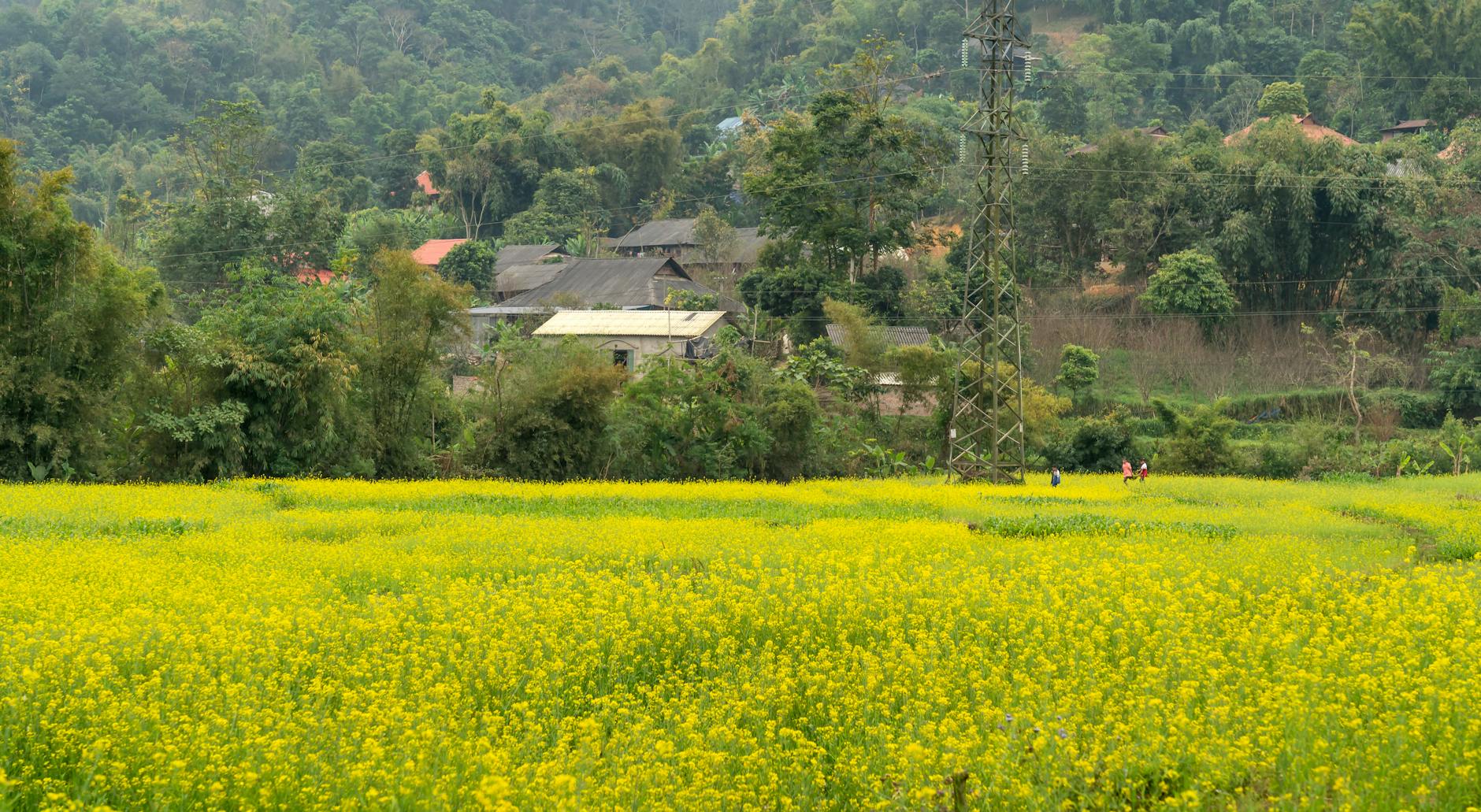
Mai Chau is not a single town. It is a valley district in Hoa Binh province, about 135 kilometers southwest of Hanoi. The area is dominated by the White Thai ethnic minority, who live in stilt houses and cultivate rice in the flat valley floor.
The landscape is gentle. Rolling green hills surround a patchwork of rice paddies, dotted with villages. There are no towering limestone karsts like Ninh Binh or dramatic mountain peaks like Sapa. Mai Chau is rural, slow-paced, and agricultural.
Tourism here has grown steadily since the 1990s. What was once a genuine off-the-beaten-path destination is now a well-established stop on the northern Vietnam circuit. Homestays line the main roads. Tour buses arrive daily. The "hidden gem" label no longer applies.
Pro tip: Mai Chau works best as a relaxing countryside break, not an adventure destination. Adjust your expectations accordingly.
Is Mai Chau worth visiting? The honest verdict
The answer depends entirely on your travel style. Here is a clear decision framework.
Mai Chau is worth visiting if:
- You want a short, easy escape from Hanoi (2-3 days maximum)
- You enjoy cycling through flat, scenic countryside
- You want to experience a Vietnamese homestay without roughing it too much
- You are on a tight budget
- You prefer quiet evenings over nightlife
Mai Chau is not worth visiting if:
- You expect Sapa-level mountain scenery
- You want challenging treks or serious hiking
- You only have one day to spare (the travel time eats your trip)
- You are looking for a "hidden gem" untouched by tourism
- You prefer luxury accommodations and fine dining
The valley is developed for tourism. That is not necessarily bad. The infrastructure means comfortable homestays, reliable transport, and English-speaking hosts. But it also means souvenir stalls, tour groups, and a certain commercialization of village life.
Warning: Some travelers feel disappointed because Mai Chau does not match the Instagram photos. The reality is simpler and quieter. That simplicity is the actual appeal.
Mai Chau vs Sapa vs Pu Luong vs Ninh Binh: Which is right for you?
Most competitors compare Mai Chau only to Sapa. This table adds Pu Luong and Ninh Binh for a complete picture.
| Destination | Scenery type | Ethnic culture | Crowds | Travel time from Hanoi | Best for | Not for |
|---|---|---|---|---|---|---|
| Mai Chau | Flat valley, gentle hills | White Thai | Moderate | 3.5-4 hours by bus | Short escape, cycling, families | Trekkers, photographers |
| Sapa | Dramatic mountains, terraced rice fields | Hmong, Dao, Giay | High (peak season) | 5-6 hours by bus, 8 hours by train | Trekking, photography, culture | Quick trips, budget travelers |
| Pu Luong | Terraced fields, forest, waterfalls | Thai, Muong | Low | 4-5 hours by bus | Nature lovers, hikers, solitude | Those wanting amenities |
| Ninh Binh | Karst mountains, rivers, caves | Kinh (Vietnamese) | High | 2-2.5 hours by bus | Boat rides, cycling, day trips | Those wanting ethnic culture |
Key differences explained:
Mai Chau vs Sapa: Mai Chau is closer, cheaper, and flatter. Sapa has more dramatic scenery and more diverse ethnic groups. Mai Chau is better for a relaxed weekend. Sapa is better for serious trekking and photography. For more on getting to Sapa, read our guide on night bus or train to Sa Pa.
Mai Chau vs Pu Luong: Many travelers confuse these two. Mai Chau is a valley. Pu Luong is a nature reserve with actual terraced rice fields. Pu Luong is less developed, more rugged, and requires more effort to reach. Some travelers combine both. For a detailed comparison, see our dedicated guide on Mai Chau & Pu Luong.
Mai Chau vs Ninh Binh: Ninh Binh offers more dramatic scenery with limestone karsts and river caves. It is closer to Hanoi and has better infrastructure. But Ninh Binh lacks ethnic minority culture. Mai Chau offers genuine homestay experiences with Thai families. For more on Ninh Binh, check our guide on Ninh Binh's quiet corners.
How many days do you need in Mai Chau?
Day trip (possible but rushed): You leave Hanoi at 6 AM and return by 10 PM. That is 7-8 hours of driving for 4-5 hours in the valley. You will see the main village, eat lunch, and cycle briefly. Most travelers regret this option.
2 days / 1 night (most common): This is the minimum for a worthwhile visit. You arrive by midday, cycle in the afternoon, enjoy a homestay dinner, and explore the next morning before returning. This works well for most travelers.
3 days / 2 nights (ideal): This allows for a relaxed pace. You can cycle to farther villages, hike to nearby waterfalls, or take a day trip to Pu Luong. You also get two homestay dinners, which are a highlight of the experience.
Pro tip: If you only have two days, skip Mai Chau and go to Ninh Binh instead. The travel time is shorter and the scenery is more impressive.
Best time to visit Mai Chau: Month-by-month breakdown
Most guides say "visit in spring or autumn." Here is the real monthly picture.
| Month | Avg temp (°C) | Rainfall | Rice field condition | Crowds | Rating |
|---|---|---|---|---|---|
| January | 15-18 | Low | Brown, bare | Low | Fair |
| February | 16-20 | Low | Brown, bare | Low | Fair |
| March | 18-24 | Low | Green, young shoots | Moderate | Good |
| April | 22-28 | Low | Green, growing | Moderate | Good |
| May | 25-32 | Moderate | Green, lush | Low | Good |
| June | 27-34 | High | Green, lush | Low | Fair |
| July | 27-34 | High | Green, lush | Low | Poor |
| August | 26-33 | High | Green, starting to yellow | Low | Poor |
| September | 24-30 | Moderate | Yellow, harvest begins | Moderate | Good |
| October | 20-26 | Low | Golden, harvest peak | High | Excellent |
| November | 17-22 | Low | Brown, post-harvest | High | Good |
| December | 14-18 | Low | Brown, bare | Moderate | Fair |
The trade-off: October has golden rice fields and excellent weather, but also the most crowds. May has green fields and fewer tourists, but hotter temperatures and rain risk. December is cool and quiet, but the fields are bare brown.
Festivals to know: The Gau Tao Festival (January-February) celebrates the Hmong New Year. The White Thai hold ceremonies during the 7th lunar month (August-September). These are genuine cultural events, not tourist shows.
How to get to Mai Chau from Hanoi: All options compared
| Mode | Duration | Cost (VND/USD) | Comfort | Safety | Best for |
|---|---|---|---|---|---|
| Public bus | 4 hours | 100,000-150,000 VND ($4-6 USD) | Basic | Good | Budget travelers |
| Limousine van | 3.5 hours | 250,000-350,000 VND ($10-15 USD) | Good | Good | Most travelers |
| Private car | 3 hours | 1,500,000-2,000,000 VND ($62-83 USD) | Excellent | Excellent | Groups or families |
| Motorbike | 4-5 hours | 200,000-300,000 VND ($8-12 USD) fuel + rental | Variable | Moderate | Adventurous riders |
| Organized tour | 3.5 hours | 500,000-1,000,000 VND ($21-42 USD) | Variable | Good | Those wanting convenience |
Road conditions: The route uses Highway 6, which is well-paved but winding through mountain passes. The Thung Khe Pass section has steep drops and occasional fog. Buses and vans handle this fine, but motorbike riders need experience with mountain roads.
The "3 hours" myth: Many sources claim a 3-hour drive. This is optimistic. Even by private car, expect 3.5 hours with traffic. Public buses take 4 hours or more. Factor this into your planning.
Warning: Do not drive a motorbike to Mai Chau unless you have experience with Vietnamese mountain roads. The Thung Khe Pass is dangerous in wet conditions.
Where to stay in Mai Chau: Homestays vs eco-resorts
| Type | Price range (VND/USD) | Pros | Cons | Best for |
|---|---|---|---|---|
| Basic homestay | 200,000-400,000 VND ($8-17 USD) per night | Cheap, authentic, family meals | Shared bathrooms, thin mattresses, cold showers | Budget travelers |
| Mid-range homestay | 400,000-800,000 VND ($17-33 USD) per night | Private rooms, better beds, hot water | Less "authentic" vibe | Most travelers |
| Eco-resort | 1,000,000-2,500,000 VND ($42-104 USD) per night | Comfortable, private, pools | Expensive, less cultural interaction | Couples, families |
| Boutique hotel | 800,000-1,500,000 VND ($33-62 USD) per night | Good amenities, reliable quality | Generic experience | Those wanting comfort |
What "authentic" really means: Basic homestays have shared squat toilets, cold showers in winter, and thin mattresses on the floor. The trade-off is genuine interaction with the host family and home-cooked meals. Mid-range homestays offer private rooms with attached bathrooms and hot water, but you lose some cultural immersion.
Pro tip: In winter (November-February), book a homestay with hot water. Cold showers at 10°C are miserable.
What to do in Mai Chau: Activities ranked by value
Must-do (worth your time):
- Cycling through the valley: The flat terrain makes cycling easy and enjoyable. Bikes are available at most homestays for 50,000-100,000 VND ($2-4 USD) per day. Routes take you through rice paddies and between villages.
- Homestay dinner: This is the highlight for most visitors. Families prepare local dishes like grilled pork, sticky rice, and wild vegetables. You eat together on the floor of the stilt house.
- Morning walk: Wake up early to see the valley in morning mist. The light is beautiful and the villages are quiet before the tour buses arrive.
Worth doing (if you have time):
- Hike to Thung Khe Pass viewpoint: A 30-minute hike up to the pass offers panoramic views of the valley. Best done early morning or late afternoon.
- Visit a local market: Mai Chau Market operates on Sundays. It sells fresh produce, meat, and household goods. This is a genuine local market, not a tourist trap.
- Cave visit: Go Lao Water Cave and Chien Cave are small but interesting. Both require a guide and a headlamp. The caves are not as impressive as Phong Nha. For cave comparisons, see which cave is best to visit in Phong Nha.
Skip if short on time:
- Cultural performances: Many homestays offer evening shows of traditional dance. These are tourist-oriented and can feel forced. Skip them for genuine conversation with your host family instead.
- Souvenir shopping: The main village has stalls selling the same handicrafts found everywhere in Vietnam. Prices are higher than in Hanoi.
- Waterfall visits: The waterfalls near Mai Chau are small and often dry in winter. They are not worth the trip if you have limited time.
What to eat in Mai Chau: Local specialties and where to find them
Must-try dishes:
- Com lam (sticky rice cooked in bamboo tubes): Rice is stuffed into bamboo sections and grilled. The result is fragrant, slightly chewy rice with a smoky flavor.
- Grilled pork (thit nuong): Marinated pork grilled over charcoal. Simple but excellent. Often served with fresh herbs and dipping sauce.
- Wild vegetables (rau rung): Foraged greens from the surrounding forest. They are bitter, earthy, and unlike anything you find in Hanoi.
- River fish (ca suối): Small fish from local streams, often fried whole or grilled. Crispy and flavorful.
Food safety: Homestay meals are generally safe. The ingredients are fresh and cooked thoroughly. Street food in Mai Chau town is fine for most travelers. For general food safety tips, read our guide on Vietnamese street food safety.
Vegetarian options: Limited but available. Inform your homestay in advance. They can prepare vegetable stir-fries, tofu dishes, and rice. Vegans will struggle more.
Pro tip: The best meals in Mai Chau are the homestay dinners. Restaurant food in town is mediocre and overpriced. Eat with your host family.
Mai Chau travel costs: Budget breakdown for 2026
Budget traveler (800,000-1,200,000 VND / $33-50 USD per day):
- Transport: 150,000 VND ($6 USD) bus from Hanoi
- Accommodation: 300,000 VND ($12 USD) basic homestay
- Food: 200,000 VND ($8 USD) homestay meals
- Activities: 100,000 VND ($4 USD) bike rental
- Miscellaneous: 50,000 VND ($2 USD)
Mid-range traveler (1,500,000-2,500,000 VND / $62-104 USD per day):
- Transport: 300,000 VND ($12 USD) limousine van
- Accommodation: 600,000 VND ($25 USD) mid-range homestay
- Food: 300,000 VND ($12 USD) homestay meals + restaurant
- Activities: 200,000 VND ($8 USD) bike rental + guide
- Miscellaneous: 100,000 VND ($4 USD)
Comfort traveler (2,500,000-4,000,000 VND / $104-166 USD per day):
- Transport: 1,500,000 VND ($62 USD) private car
- Accommodation: 1,500,000 VND ($62 USD) eco-resort
- Food: 500,000 VND ($21 USD) restaurant meals
- Activities: 500,000 VND ($21 USD) guided tours
- Miscellaneous: 200,000 VND ($8 USD)
Hidden costs to watch for:
- Tips for homestay hosts: 50,000-100,000 VND ($2-4 USD) per night is appreciated
- Drinks: Beer is 15,000-20,000 VND ($0.60-0.80 USD) at homestays, double at restaurants
- Bike rental: Often included in homestay price, but confirm first
- Entrance fees: Some villages charge 20,000-50,000 VND ($0.80-2 USD) per person
Common mistakes travelers make in Mai Chau
1. Overestimating how much you can do in one day The drive takes 4 hours each way. That leaves only a few hours in the valley. You will spend more time on the bus than exploring.
2. Expecting Sapa-level scenery Mai Chau is a flat valley. The hills are gentle. If you want dramatic mountain views, go to Sapa or Ha Giang. For more on Ha Giang, see our honest 2026 guide to the Ha Giang Loop.
3. Not bringing warm clothes in winter Temperatures drop to 10°C (50°F) at night. Homestays have thin blankets. Bring a fleece or jacket.
4. Falling for souvenir scams Stalls in the main village sell "handicrafts" that are mass-produced in China. Real local crafts are sold directly by villagers. Ask your homestay host for recommendations.
5. Assuming all homestays are equal Some homestays are comfortable with private rooms and hot water. Others are basic with shared facilities. Read recent reviews on booking platforms. Look for mentions of cleanliness, food quality, and host friendliness.
Is Mai Chau safe? Practical safety and health notes
Road safety: The biggest risk in Mai Chau is the drive. Highway 6 has winding mountain roads, especially at Thung Khe Pass. Fog can reduce visibility in winter. Buses and vans are safe. Motorbikes require experience.
Food hygiene: Homestay meals are safe. Restaurant food in town is fine. Street food is limited but acceptable. For general food safety, read our Vietnamese street food safety guide.
Mosquitoes: Present year-round but worse in summer. Use DEET repellent. Dengue is possible but rare in this area. For more, see our mosquito, dengue and malaria risk map.
Altitude sickness: Mai Chau is only 200 meters above sea level. Altitude sickness is not a concern.
Emergency services: Mai Chau has a small clinic for minor issues. Serious problems require transport to Hoa Binh city (45 minutes) or Hanoi (3.5 hours). Travel insurance is essential. For more, see our guide on medical emergencies in Vietnam's big cities.
Pro tip: Bring a basic first-aid kit with bandages, antiseptic, painkillers, and anti-diarrhea medication. Pharmacies in Mai Chau are limited.
FAQ
Q: How many days do you need in Mai Chau? A: Two days and one night is the minimum for a worthwhile visit. A day trip is possible but involves 6-7 hours of driving for only 4-5 hours on the ground. Three days and two nights allows for proper exploration including a hike or day trip to Pu Luong.
Q: Is Mai Chau better than Sapa? A: It depends on priorities. Mai Chau is closer to Hanoi, cheaper, and less crowded, but Sapa offers more dramatic mountain scenery and more diverse ethnic minority cultures. Mai Chau is better for a short escape; Sapa is better for serious trekking and photography.
Q: Is Mai Chau worth visiting in the rainy season? A: May to September brings heavy rain, leeches on hikes, and muddy cycling conditions. Rice fields are green but skies are often grey. It is not ideal but still possible if you are flexible. Avoid July and August for outdoor activities.
Q: What is one of the biggest mistakes you can make in Mai Chau? A: Assuming a day trip will give you a real experience. Most of the travel time is on winding mountain roads, leaving only a few rushed hours in the valley. Travelers often return more exhausted than relaxed.
Q: Can you do Mai Chau without a tour? A: Yes, and it is often better independently. Public buses run from Hanoi to Mai Chau town. From there, bicycles are available at most accommodations. Independent travel gives more flexibility and costs less than packaged tours.
Q: What is the difference between Mai Chau and Pu Luong? A: Mai Chau is a valley with flat rice fields, more developed for tourism, and closer to Hanoi. Pu Luong is a nature reserve with terraced rice fields, more rugged terrain, fewer tourists, and requires more effort to reach. Many travelers combine both.
Q: Is Mai Chau expensive? A: Mai Chau is affordable by Vietnam standards. A budget traveler can spend 800,000-1,200,000 VND ($33-50 USD) per day including transport, homestay, food, and activities. Mid-range travelers should budget 1,500,000-2,500,000 VND ($62-104 USD) per day.
Q: What should I pack for Mai Chau? A: In winter (November-February), bring warm layers. Temperatures can drop to 10°C (50°F) at night. In summer, light clothing and rain gear. Always bring insect repellent, sunscreen, comfortable walking shoes, and a headlamp for cave visits.