Geography & orientation
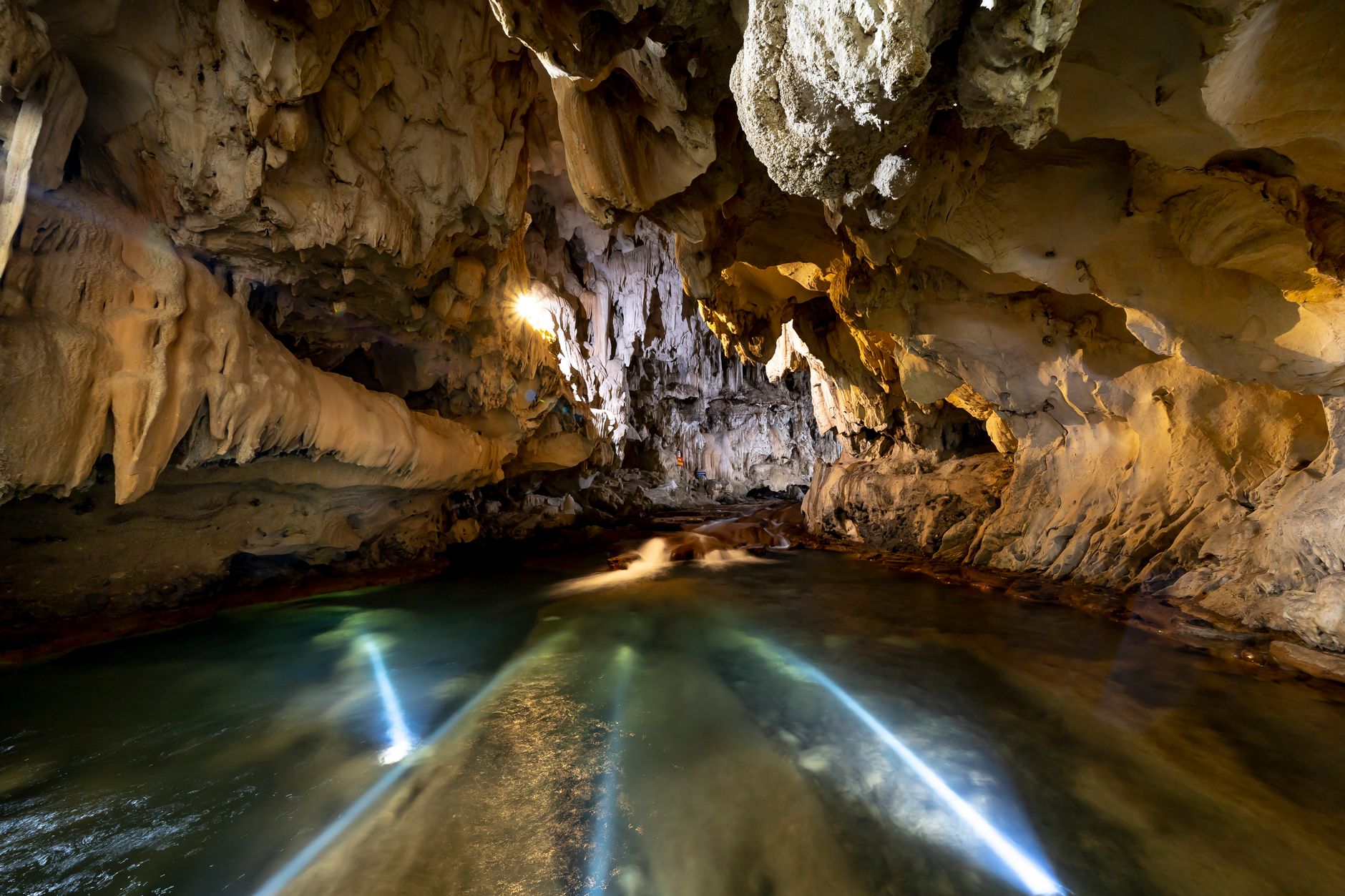
Phong Nha sits in the western part of Quang Binh Province, roughly 45 minutes by road from the provincial capital Dong Hoi. The town itself is compact, with a single main road running along the Son River and a handful of side streets lined with guesthouses, cafés, and small restaurants. The wider Phong Nha–Ke Bang National Park stretches across rugged karst terrain, dense forest, and underground river systems, covering more than 120,000 hectares.
From a practical standpoint, most visitors arrive first in Dong Hoi, then take a bus or taxi to Phong Nha. Once in town, you can walk easily between accommodations, travel agencies, and the riverfront, or rent a bicycle or motorbike to explore the countryside. The park’s main entrance and the tourist center are a short drive or motorbike ride from the town square.
Don’t try to cram your entire Vietnam trip into just one night in Phong Nha. Reserve at least two to three nights to enjoy both the caves and the countryside, and to avoid rushing through long cave‑based tours.
History & cultural context
Before it became a byword for adventure tourism, Phong Nha was a quiet agricultural and forestry area in central Vietnam. The region gained international attention in the early 2000s when UNESCO listed Phong Nha–Ke Bang as a World Natural Heritage site, first for its geological value and later for its biodiversity. The discovery of colossal caves such as Son Doong further cemented its reputation as a “kingdom of caves”.
Today, many local households rely on tourism: guiding tours, running homestays, cooking meals, or renting bikes. Vietnamese living in Phong Nha tend to be friendly but reserved; greetings are often gentle smiles, and direct questions are rare unless you show curiosity about their lives. You will see farmers working in rice fields, children cycling home from school, and elders sitting outside tiny family shops—ordinary scenes that anchor the destination in daily rural life.
What to see – caves, rivers & park highlights
Son Doong Cave – the world’s largest cave
Son Doong is the jewel of Phong Nha–Ke Bang. With a ceiling rising up to 200 meters and a length of over 9 kilometers, it is often described as large enough to hold a 40‑story building. The cave hosts its own micro‑climate, subterranean rivers, and even patches of jungle deep underground. However, Son Doong tours are highly restricted: only about 1,000 visitors per year are allowed, and departures are usually fully booked 12–18 months in advance.
The standard Son Doong expedition lasts four days and three nights, with camping inside the cave and along the jungle trail. The experience is physically demanding, expensive, and not suitable for casual sightseeing. Budget around $3,000–3,500 for the full Oxalis‑led tour (roughly 85–100 million VND), depending on the season.
If you want to visit Son Doong, plan early and book directly with Oxalis Adventure. Flexible travelers can look for last‑minute cancellations, but availability is extremely limited.
Other major caves & cave‑based tours
- Paradise Cave (Hang Thien Duong) – One of the longest caves in Vietnam, Paradise is accessible by a paved pathway and lit by LEDs. A walk through its grand halls can take 1–2 hours, and the ticket plus transport usually costs about $10–15 (250,000–375,000 VND) per person.
- Phong Nha Cave – This classic cave is reached by boat along the Son River. At the mouth of the cave, you transfer to small rowboats that glide into chambers with impressive stalactites. A typical ticket plus boat combination is around $7–12 (175,000–300,000 VND).
- Tu Lan Cave System – A network of caves, rivers, and waterfalls where you hike, wade, and swim through narrow passages. Tours range from one‑day “easy” trips to four‑day expeditions and usually start around $100–200 (2.5–5 million VND) per person, depending on duration and inclusions.
- Hang En (En Cave) – The world’s third‑largest cave, sometimes visited on a one‑day trek with an option to camp overnight. The total cost, including guide and transport, is often in the $60–120 (1.5–3 million VND) range.
- Hang Va / Nuoc Nut – A more challenging two‑day tour involving rock‑climbing, river crossing, and narrow tunnels. Expect similar pricing to Tu Lan, with longer trips edging toward $150–250 (3.7–6.2 million VND).
- Pygmy Cave – A three‑day trekking‑and‑caving adventure with abseiling and underground river crossings, usually priced in the $200–350 (5–8.7 million VND) bracket.
These tours are best arranged through licensed operators such as Oxalis, Jungle Boss, or established local agencies in town. Most companies provide safety gear, experienced guides, and all‑day transport.
Rivers, kayaking & nature walks
Beyond caves, Phong Nha offers more relaxed ways to connect with the landscape.
- River kayaking – You can rent kayaks from homestays or local outfits and paddle along the Son River, passing jungle‑lined banks and small bamboo bridges. An independent day of kayaking typically costs about $10–15 (250,000–375,000 VND) for a kayak, plus a small fee for life jackets.
- Hang Toi area – A short drive from the town, this cluster of caves and riverside activities includes kayaking, zip‑lining, and short exploration trails. Entrance fees and activity packages are usually around $10–20 (250,000–500,000 VND) per person.
- Hiking & wildlife walks – Local guides can lead you through lesser‑known trails in the national park, sometimes including night walks or visits to animal‑rescue centers. A half‑day guided hike often costs $20–40 (500,000–1 million VND), while multi‑day eco‑tours can run $100–300 (2.5–7.5 million VND).
Where to stay – neighborhoods & types of accommodation
Phong Nha’s accommodation cluster around three general zones:
- Riverside town center – The main road running along the Son River hosts budget hostels, mid‑range guesthouses, and some small boutique hotels. This is ideal if you prefer walking access to cafés, restaurants, and tour agencies. Simple rooms start around $10–15 (250,000–375,000 VND) per night, while comfortable 2–3 star hotels often charge $25–45 (625,000–1.1 million VND).
- Countryside homestays & farm‑style villas – A little outside town, you’ll find family‑run homestays and eco‑oriented villas surrounded by rice fields and jungle. These tend to be quieter, more scenic, and often include breakfast. Expect prices in the $15–25 (375,000–625,000 VND) range for basic rooms, rising to $40–70 (1–1.75 million VND) for larger or more private bungalows.
- Higher‑end resorts & boutique lodges – A growing number of eco‑luxury resorts and boutique lodges have opened near the park entrance or along the river. These properties typically charge $80–150 (2–3.75 million VND) per night, sometimes more during peak season.
If you like chatting with hosts, tasting home‑cooked food, and waking up to rice‑paddy views, choose a countryside homestay for at least one night. If you prefer convenience and easy access to town, base yourself in the riverside center.
Where to eat – restaurants & local specialties
Town restaurants and cafés
Phong Nha’s food scene is simple but friendly, with several family‑run restaurants and cafés clustered along the main road.
- Coffee Station – A popular café offering coffee, smoothie bowls, and light snacks. A typical coffee or smoothie bowl costs about $1.50–3.50 (35,000–85,000 VND).
- The Pub with Cold Beer – A riverside restaurant‑cum‑bar with a quirky “cold beer”‑in‑a‑freezer setup, often reached by a short boat ride or a country road. Main dishes usually run $4–7 (100,000–175,000 VND).
- Chao Restaurant – Known for its barbecue and Vietnamese‑style grilled dishes, with mains around $3–6 (75,000–150,000 VND).
- Momma D’s Rooftop – A rooftop‑style café and bar ideal for sunset drinks and light snacks. Cocktails and juices are often in the $2–4 (50,000–100,000 VND) range.
Most local restaurants serve a mix of Vietnamese staples (pho, bun, rice dishes, grilled meat) and a few Western‑style options (pasta, burgers, pizzas). Meals are inexpensive by international standards, and tipping is not expected.
Local food experiences
- Homestay dinners – Many homestays offer home‑cooked meals using local vegetables, rice, and occasionally free‑range chicken or fish. A three‑course meal per person commonly costs $5–10 (125,000–250,000 VND).
- Street‑style snacks – Small roadside vendors sell banh mi, grilled skewers, and fresh fruit. A simple banh mi is usually about $1–1.50 (25,000–35,000 VND), while grilled skewers cost roughly $0.50–1 (12,000–25,000 VND) each.
Nightlife & evening activities
Phong Nha is not a clubbing town, but its evenings have a relaxed, social vibe.
- Riverside cafés and bars – Several places along the river offer simple stools, loudspeakers with English‑pop playlists, and cold beers or cocktails. Drinks are usually $1–3 (25,000–75,000 VND) for local beer and $2–4 (50,000–100,000 VND) for cocktails.
- Community‑style hangouts – Some hostels and guesthouses run communal dinners, board games, or movie nights. These are great for solo travelers and are usually free to join or just a small fee for drinks.
- Quiet nights in the countryside – Staying in a homestay or remote villa often means simple evenings: stargazing, fire‑lit chats, or early‑to‑bed downtime. For many visitors, this is precisely the charm of visiting Phong Nha.
Shopping & local crafts
Phong Nha does not have large malls or souvenir‑centered markets, but you can find small, authentic‑feeling items.
- Street vendors and local shops – Small shops and roadside stalls sell basic souvenirs, T‑shirts, hats, and handicrafts. Typical items such as woven bags or wooden carvings usually cost $2–8 (50,000–200,000 VND).
- Homestay‑based crafts – Some homestays partner with local artisans to sell embroidered textiles, bamboo products, or local honey. Prices are usually modest, and purchasing directly supports households rather than mass‑produced goods.
Bargaining is not as aggressive as in big‑city markets. If you like an item and it feels fairly priced for a local product, paying the stall’s asking price is appreciated.
Unique experiences and off‑the‑beaten‑path ideas
For travelers who want more than the standard cave tours, Phong Nha offers several unusual experiences.
- Bike trips into the countryside – Many hotels lend bicycles for free or a small fee. A popular self‑guided route loops through nearby villages, paddy fields, and the Ho Chi Minh Highway edge roads, often ending at local swimming holes or small viewpoints. Cycling is best in the morning or late afternoon to avoid midday heat.
- Motorbike tours – If you are comfortable riding, renting a motorbike (around $7–15 / 175,000–375,000 VND per day) allows you to explore winding country lanes and minor viewpoints. Some agencies offer guided motorbike tours that include local drivers who can stop for photos and explanations.
- Farm‑to‑table meals – A few homestays and eco‑resorts organize short farm visits followed by a meal prepared from the day’s harvest. These are usually part of a half‑day or full‑day package.
- Jungle‑style spa and wellness – Some eco‑resorts and boutique lodges offer simple massage, herbal baths, or yoga‑style wellness sessions in scenic outdoor settings. Prices vary but often start around $15–30 (375,000–750,000 VND) for a one‑hour massage.
Day trips from Phong Nha
Dong Hoi and nearby coastal towns
Most visitors pass through Dong Hoi on their way to or from Phong Nha. The town offers a short city break feel: there are small markets, a beach area, and a few modern cafés and restaurants. From Phong Nha, a bus to Dong Hoi costs roughly $1–2 (25,000–45,000 VND) and takes about 45–90 minutes; a taxi is $10–15 (250,000–375,000 VND) for the one‑way trip.
Historical routes and viewpoints
- Ho Chi Minh Trail viewpoints – Some guided tours or local drivers can take you to nearby Trail‑related viewpoints and remnant paths. These are usually combined with a countryside or motorbike loop, costing about $20–40 (500,000–1 million VND) per person depending on how long you go.
- Bong Lai Valley – A scenic valley area about a 15‑kilometer loop from Phong Nha, often explored by bicycle or motorbike. It features small farms, livestock, and natural swimming spots; the ride itself is the main attraction, and there is no entrance fee.
Practical information for travelers
Best time to visit Phong Nha
The dry season from March to August is generally considered the best time to visit Phong Nha. During these months, rainfall is lower, roads are in better shape, and many caves are fully accessible. The shoulder months of February and September can also work well, though occasional rain showers are possible.
The rainy season from October to December can bring heavy rain that sometimes closes certain caves or makes trekking and kayaking difficult or unsafe. Some multi‑day cave expeditions are not operated during this period.
Transport to and from Phong Nha
Getting to Phong Nha
- By plane – The closest airport is Dong Hoi Airport (VDH), which receives domestic flights from Hanoi and Ho Chi Minh City, and a few international flights from cities like Chiang Mai. From the airport, a taxi to Phong Nha costs about $8–12 (200,000–300,000 VND), while a shared or bus‑style transfer is usually $3–5 (75,000–125,000 VND).
- By train – Dong Hoi railway station sits on the main Hanoi–Ho Chi Minh City line. From there, you can take a local bus (about $1–2 / 25,000–45,000 VND) or a taxi (about $8–12 / 200,000–300,000 VND) to Phong Nha.
- By bus – Overnight sleeper buses run from Hanoi to Phong Nha for roughly $12–17 (300,000–425,000 VND) per seat, with a journey of about 9 hours. There are also daytime buses from Hue (around $6–7 / 150,000–175,000 VND) and Da Nang (around $8–9 / 200,000–225,000 VND).
| Transport to Phong Nha (from major cities) | Approx. duration | Typical cost per person |
|---|---|---|
| Overnight bus from Hanoi | 8–9 hours | $12–17 (300,000–425,000 VND) |
| Day bus from Hue | 4–5 hours | $6–7 (150,000–175,000 VND) |
| Day bus from Da Nang | 5–6 hours | $8–9 (200,000–225,000 VND) |
| Taxi from Dong Hoi airport | 45–60 minutes | $8–12 (200,000–300,000 VND) |
| Local bus from Dong Hoi town | 45–90 minutes | $1–2 (25,000–45,000 VND) |
Currency, budget & daily costs
Vietnam uses the Vietnamese dong (VND). ATMs and small cash‑exchange services are available in Phong Nha town, but larger banks are in Dong Hoi. Credit‑card acceptance is still limited to higher‑end hotels and some larger restaurants.
A rough daily budget for a mid‑range traveler in Phong Nha:
- Accommodation: $10–25 (250,000–625,000 VND) per night in a simple guesthouse or homestay; $40–150 (1–3.75 million VND) in boutique or eco‑luxury properties.
- Food: $5–10 (125,000–250,000 VND) for three meals if you mix local restaurants and homestays.
- Local transport: $1–5 (25,000–125,000 VND) per day if you walk or use local buses; more if you rent a motorbike or rely on taxis.
- Activities: $10–30 (250,000–750,000 VND) for a short day tour; $60–350+ (1.5–8.7+ million VND) for multi‑day caving or trekking expeditions.
Overall, a three‑day, mid‑range visit to Phong Nha can be done for roughly $100–250 (2.5–6.25 million VND) excluding long‑haul flights.
Language, safety & local tips
- Language – Vietnamese is the main language, but many hotel staff and tour operators in Phong Nha speak basic English. Having a simple phrasebook or a translation app is useful for interacting with homestay families and local villagers.
- Safety – Phong Nha is generally safe, with low rates of violent crime. However, cave‑based expeditions are physically demanding: always listen to guides, use safety gear, and do not attempt difficult routes if you are not fit or experienced.
- Environmental responsibility – As a UNESCO‑listed area with fragile ecosystems, Phong Nha benefits from responsible behavior. Avoid leaving trash, do not touch or disturb cave formations, and follow local rules around flash photography or restricted zones.
- Packing tips – Bring sturdy shoes, quick‑dry clothing, a light rain jacket, insect repellent, and a reusable water bottle. For cave tours, operators usually provide helmets and headlamps, but you may want to bring extra socks and a small backpack.
Sample itineraries
1–2 days in Phong Nha
- Day 1: Arrive in Phong Nha, check into a riverside guesthouse or homestay, and walk along the Son River. In the afternoon, visit Phong Nha Cave by boat and perhaps take a short hike or a river kayaking outing.
- Day 2: Take a half‑day trip to Paradise Cave, then spend the afternoon cycling or motorbiking through nearby countryside lanes. If you have time in the evening, join a riverside café or a candle‑lit dinner at a homestay.
3–4 days in Phong Nha
- Day 1: Arrive and settle in. Explore the town, rent a bicycle, and enjoy a sunset riverside walk or drink.
- Day 2: Full‑day excursion to a major cave system such as Tu Lan or Hang En. Plan for a physically active day with hiking, wading, and short swims.
- Day 3: Visit Paradise Cave and Phong Nha Cave, or combine both with a countryside cycling loop and a visit to Bong Lai Valley.
- Day 4: Choose between a relaxed nature day (birdwatching, light hiking, or a spa session) or a short day trip to Dong Hoi before continuing your journey south or north.
5+ days including Son Doong
Travelers planning to visit Son Doong will typically need to build the four‑day expedition into a longer Vietnam itinerary. A viable 7–10‑day core plan might look like:
- 2–3 days in Hanoi or Hue before traveling to Dong Hoi.
- 1–2 days in Dong Hoi/Phong Nha for acclimatization and short local tours.
- 4 days on the Son Doong expedition.
- 1–2 days in Phong Nha afterward to relax, reflect, and explore milder countryside activities.
Visiting Phong Nha – what to remember
A visit to Phong Nha is less about ticking off a checklist and more about immersing yourself in a landscape of towering karst peaks, jade‑green rivers, and vast underground worlds. Planning your trip with clear expectations—about physical demands, booking lead‑times, and the slow pace of rural life—will help you make the most of this unique corner of Vietnam. Whether you come for the world‑famous Son Doong or for a quieter few days above ground, knowing what to do in Phong Nha and how to structure your time can turn a brief stop into a highlight of your Vietnam journey.