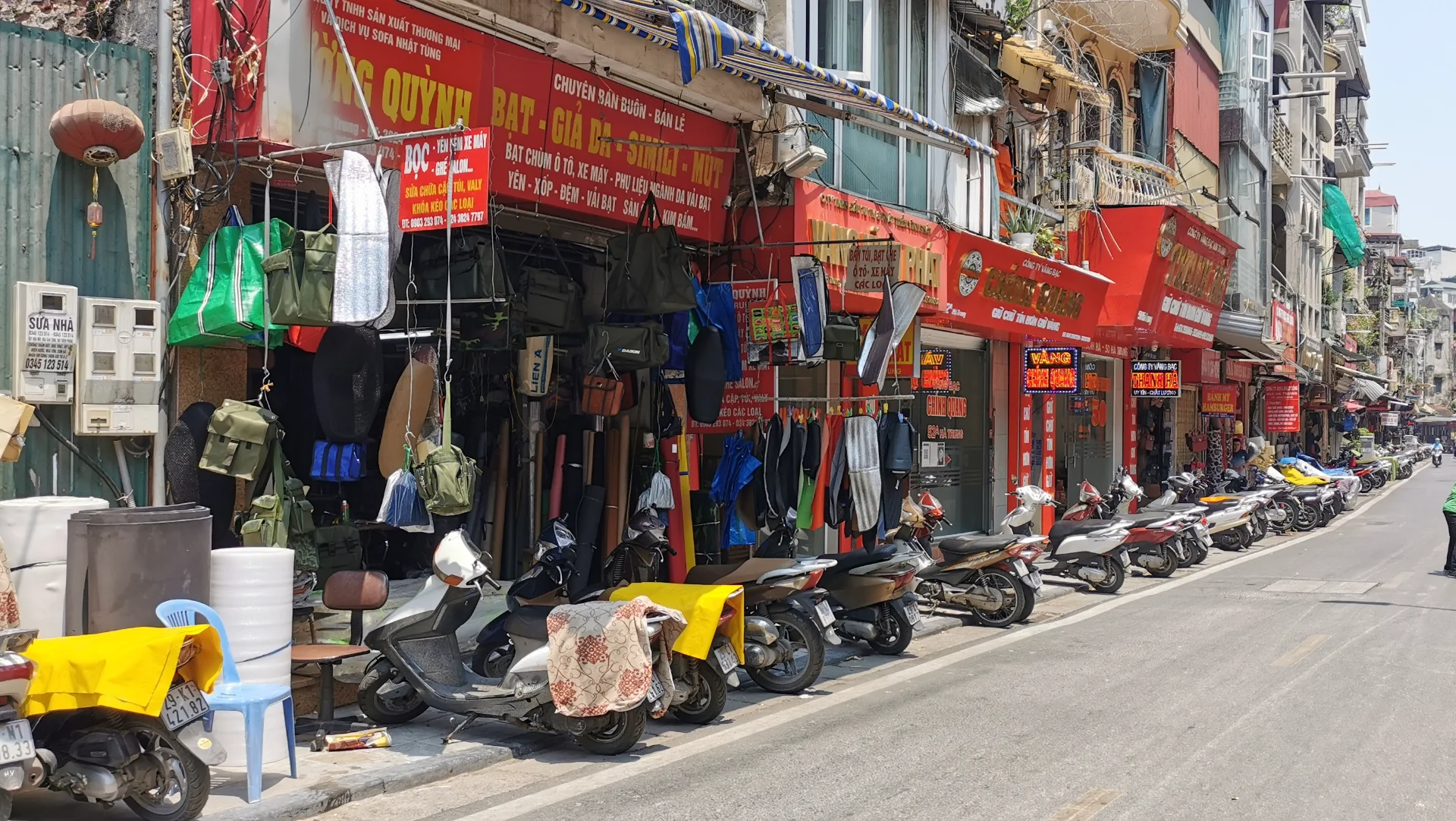
I learned this the hard way on Nguyen Hue Boulevard at 5:47 PM, when a tidal wave of motorbikes swallowed the crosswalk. Tourists freeze, jump back, or sprint — all dead giveaways to drivers that you're unpredictable. The locals? They step into the stream like monks entering meditation: slow, deliberate, utterly calm.
Why everything you've read about "eye contact" is wrong
Most blogs tell you to make eye contact with oncoming drivers. In reality, maintaining eye contact means you're watching one scooter while another clips your elbow from the blind side. Vietnamese drivers are scanning everything but your eyes — your hips, your feet, even the shadow you cast.
The "continuous shuffle" method
Stand at the curb on Hang Bac Street around 8:30 AM. Watch a local grandmother carrying a basket of bun cha ingredients. She doesn't pause at the edge. She steps into traffic with her arm extended, palm facing the flow — not to stop them, but to signal "I see you."
Never make sudden stops. That's how you get rear-ended.
Never run. A jogging body is harder for a driver to predict than a walking one.
Keep your head swiveling left-right-left, but focus on the empty space between vehicles, not the vehicles themselves.
The walk, don't weave rule
Imagine you're a rock in a stream. The motorbikes are water. They will flow around you if you stay solid. The moment you dodge left to avoid one bike, you step into the path of another. On Le Loi Street in Saigon, I watched a Dutch backpacker zigzag like a fleeing rabbit — he nearly got clipped three times before a cyclo driver yelled "dung lai!" (stop).
Why street vendors are your best teachers
Sit at a plastic stool on Tran Phu Street in Nha Trang and order a ca phe sua da ($1.50 / 35,000 VND). Watch the woman weaving through traffic with a bamboo pole across her shoulders. She is crossing 100 times a day, at high noon and monsoon rain, with hot soup dangling from both ends.
Notice her center of gravity is low, her steps are short, and she never looks at the handlebars of approaching bikes — only at the gap between their front wheels. That gap is your target. Aim for it, not the other side of the road.
Pro tip: Stand behind a local for 30 seconds at the edge of Dong Khoi Street (any time between 5 PM and 7 PM). Let them be your shield. Follow their exact rhythm. Don't overtake.
Insider Tips: What most tourists miss or get wrong
The crosswalk is a suggestion, not a shield
Painted zebra stripes on Nguyen Trai Street do nothing. Drivers will not stop. They might slow by 5 km/h if you walk with purpose. Don't wave your hand like you're hailing a taxi — that confuses them. Keep your arm at your side or slightly forward.
Rush hour is actually easier
Between 7:30–8:30 AM and 5:00–6:30 PM, traffic moves at a crawl. The sheer density of motorbikes means they're traveling at 10–15 km/h, not 40 km/h. This is the safest time to practice. On Pham Ngu Lao Street in Saigon's backpacker area, you'll see helmetless locals flowing across intersections during rush hour like schools of fish.
Never use your phone
Even glancing at your phone for one second breaks your rhythm. Drivers read your body language — a bent neck means you're distracted, and they'll cut closer. Keep your hands free, your phone zipped in a cross-body bag.
The hand-on-bike trick
If you're truly panicking, extend your hand and lightly touch the back of a passing motorbike. The driver will sense you and slow instinctively. I've seen a Vietnamese mother do this with a toddler in one arm and a backpack in the other on Cau Giay Road — it works.
Practical Info: Transport, budget snapshot, best timing
Timing your crossing practice
Time | Risk Level | Best Street | Notes |
|---|---|---|---|
6:00–8:00 AM | Low | Hang Ma Street (Hanoi) | Light traffic, food vendors |
10:00–11:30 AM | Medium | Nguyen Van Troi Street (Saigon) | Wide road, clear sightlines |
1:00–3:00 PM | High | Tran Hung Dao Street | Delivery scooter rush |
5:00–6:30 PM | Low | Dong Khoi Street | Slow crawl, safe for beginners |
Budget snapshot
Grab motorbike taxi: $1–3 (25,000–75,000 VND) per ride — use this if you're too scared to cross alone.
Pedestrian crossing fee (unofficial): Zero. Crossing is free, but a bottle of water ($0.50 / 12,000 VND) at a curb stall earns you a smile and sometimes a shout of warning from the vendor.
Hospital visit if you misstep: Uninsured, a scooter collision can cost $200–500 (5–12 million VND) for X-rays and stitches. Travel insurance is not optional.
Worst streets to cross alone
Xo Viet Nghe Tinh Street (Saigon): 6 lanes of hell. Use the overhead pedestrian bridge.
Le Duan Street (Hanoi): Diplomatic zone with armored cars that don't brake.
Bui Vien Walking Street (Saigon): closed to cars but open to motorbikes at night — drunk tourists make it hazardous.
The one rule that trumps all others
You are not fighting the traffic. You are merging with it. The moment you accept that every motorbike will miss you — not because they see you, but because they've been missing people for 30 years — your shoulders drop, your pace steadies, and you cross like you've lived here your whole life.
Final truth: A Vietnamese driver would rather graze a wall than hit a pedestrian. They are masters of the millimeter. Trust their skill, trust your own stillness, and step off the curb.